Full Moonlight Luz de Luna Llena
Credit: Jeff Dai
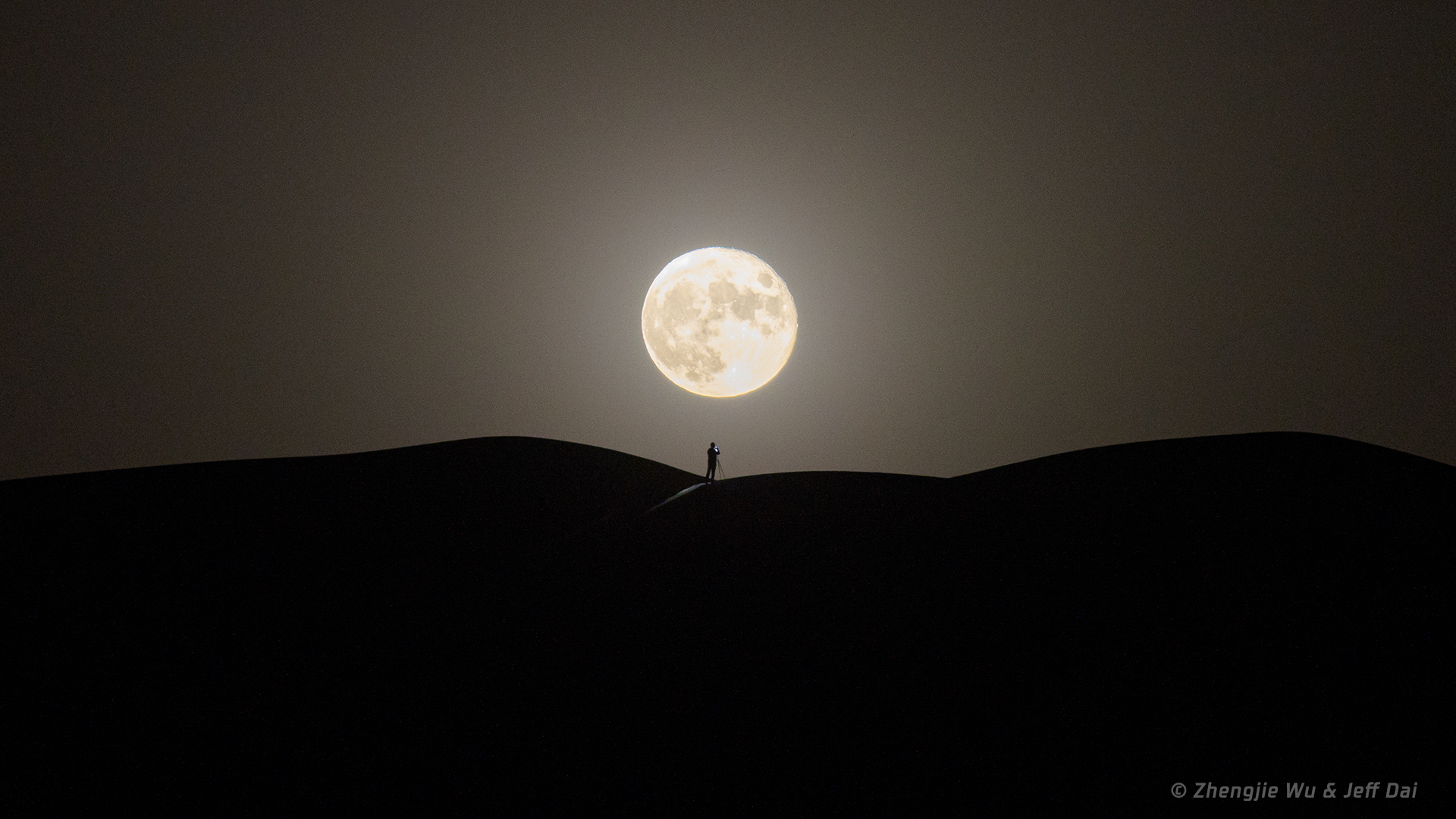
The Full Moon is the brightest lunar phase, and tonight you can stand in the light of the first Full Moon of 2026. In fact, the Moon's full phase occurs on January 3 at 10:03 UTC, while only about 7 hours later planet Earth reaches its 2026 perihelion, the closest point in its elliptical orbit around the Sun, at 17:16 UTC. January's Full Moon was also not far from its own perigee, or closest approach to planet Earth. For this lunation the Moon's perigee was on January 1 at 21:44 UTC. You can also spot planet Jupiter, near its brightest for 2026 and close on the sky to the Full Moon tonight. But while you're out skygazing don't forget to look for rare, bright fireballs from the Quadrantid meteor shower.
La Luna Llena es la fase lunar más brillante, y esta noche puedes disfrutar de la luz de la primera Luna Llena de 2026. De hecho, la fase de Luna Llena ocurre el 3 de enero a las 10:03 UTC, mientras que solo unas 7 horas después el planeta Tierra alcanza su perihelio de 2026, el punto más cercano en su órbita elíptica alrededor del Sol, a las 17:16 UTC. La Luna Llena de enero tampoco estaba lejos de su propio perigeo, o punto de máximo acercamiento al planeta Tierra. Para esta lunación, el perigeo lunar fue el 1 de enero a las 21:44 UTC. También puedes divisar el planeta Júpiter, cerca de su mayor brillo para 2026 y muy próximo en el cielo a la Luna Llena de esta noche. Pero mientras disfrutas observando el cielo, no olvides buscar los raros y brillantes bólidos de la lluvia de meteoritos Cuadrántidas.